Why I Fly…
Pop or heavy metal?
Ease or challenge?
Hot or cold?
Theist or atheist?
Sweet or savoury?
Black or orange?
Terra firma or airborne?
Many positions are harshly judged, as if they are deliberate choices, especially by those of opposing preference, but have you ever thought about how much control we actually have over what it is that we like/prefer?
While we can overtly choose specific actions, when it comes to preferences, we at best have partial influence rather than the ability to dictate. Preferences are instead shaped by past experiences, culture and processes of a subconscious nature…completely out of our control.
So…it is thus, that I have absolutely no idea why I started to fly…but what I am certain of, is why I continue to.
The history of how I started flying in 1992 as well as my crash soon thereafter, justifies a separate blog…so for now the focus will be on the rewards of flying.
Fulfilment is profoundly derived from expressing our authentic selves.
When our actions align with our values, innate skills and inner nature, there is a visceral sense of wholeness and meaningful purpose.
Thriving mostly on spontaneity and novelty however, my strong-suit is definitely not discipline, routine and prioritising safety above all else, disqualifying me as a career pilot…yet here I am enduring it all out of my own volition just to be a recreational aviator.
I suspect that my preference for challenge over ease in some circumstances, is just sufficient enough to deliberately choose specific actions to mitigate my shortcomings. If it however was up to my unrestrained self, I’d kick the tyres, light the fires and boldly blast off into the sky…but there is an adage in the aviation fraternity of unknown origin:
“There are old pilots and there and bold pilots, but there are no old, bold pilots”
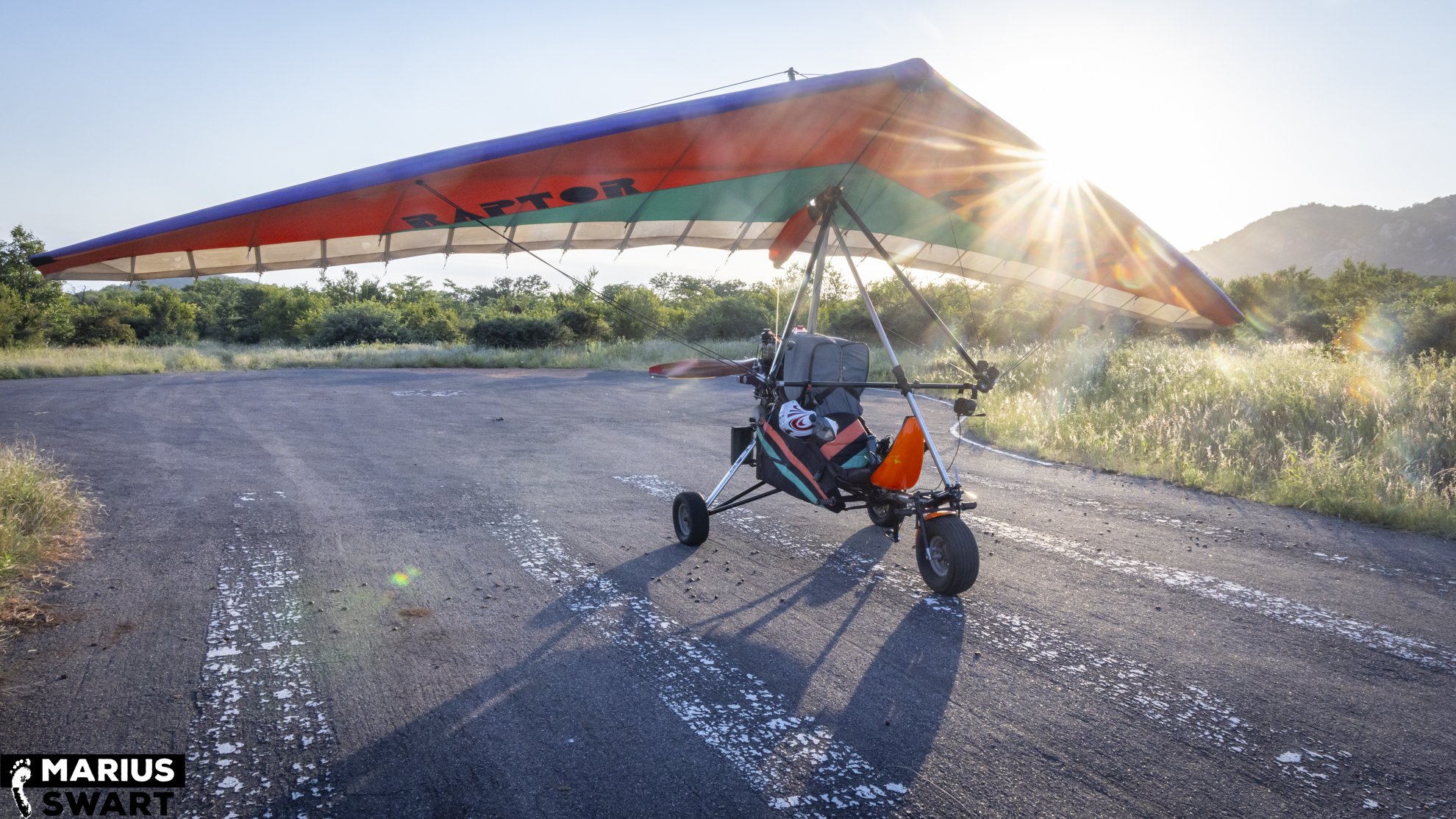
Although my spatiotemporal orientation is very good, disappointingly I suffer from feeling incredibly unwell in closed cockpits and 3-axis fixed-wing aircraft. Fortunately there are 2-axis planes which do not have tails or an enclosed cockpit…they are called Weight-shift or Flexwing microlights…affectionately known as Trikes…the motorbikes of the sky!
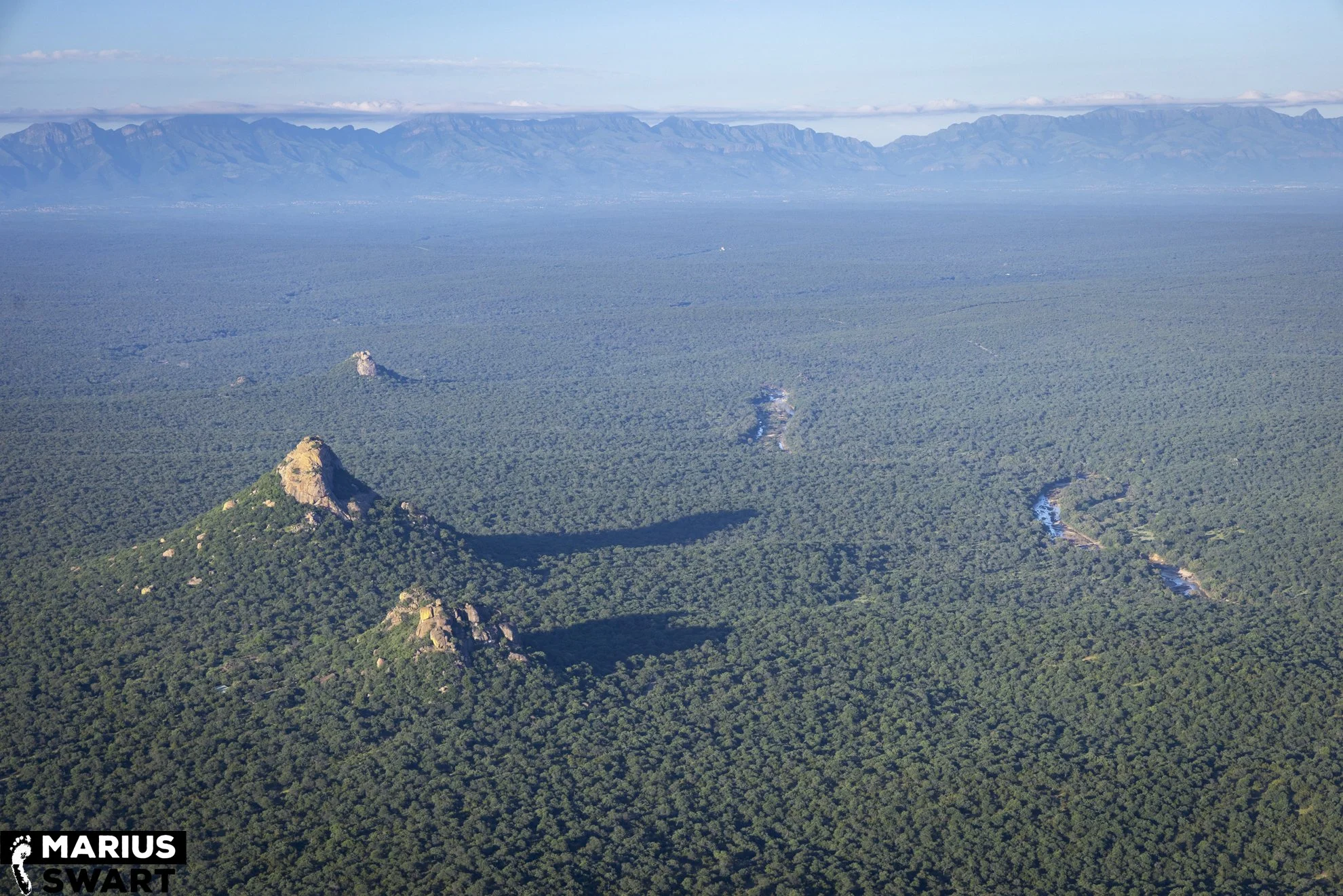
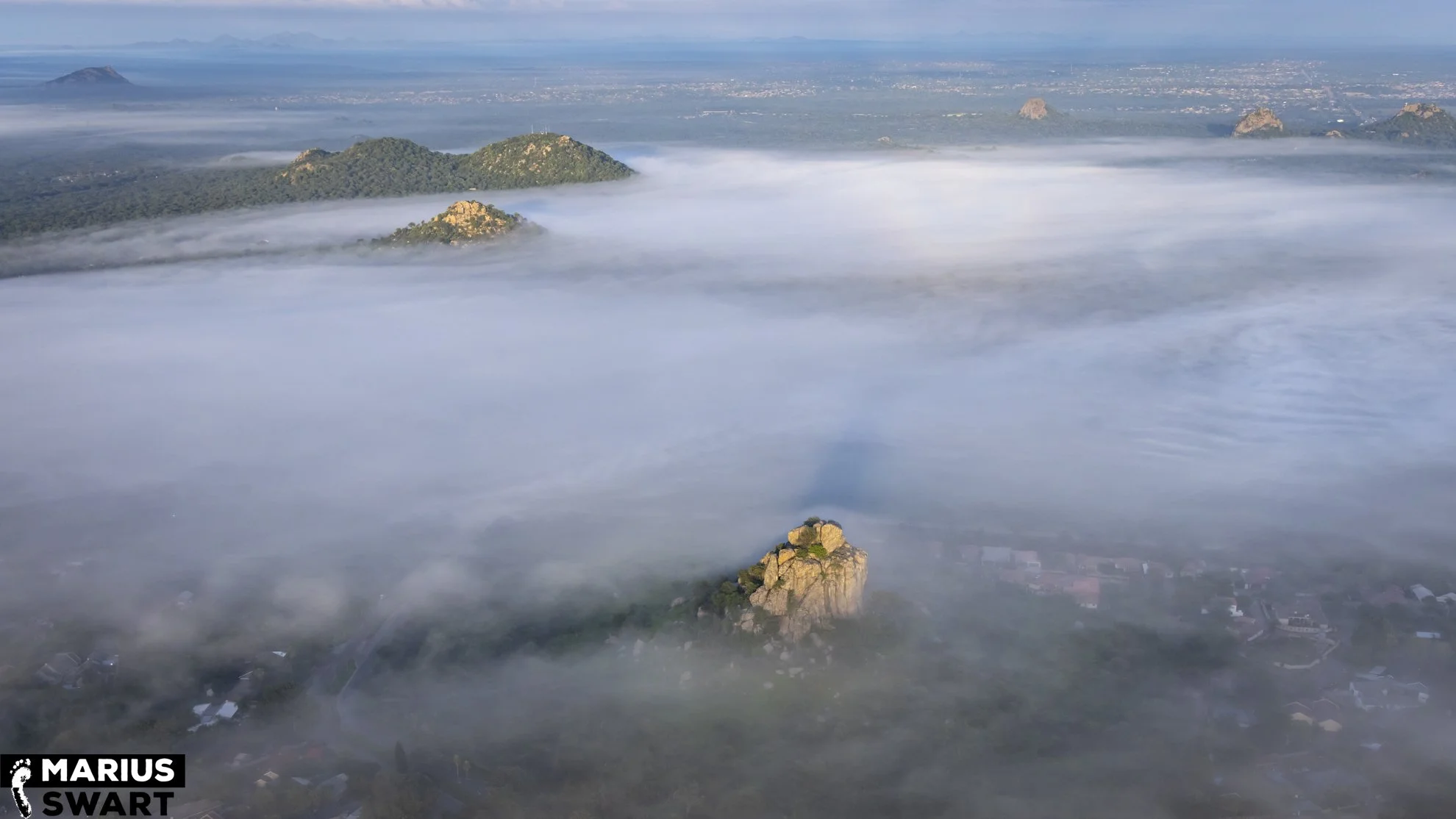
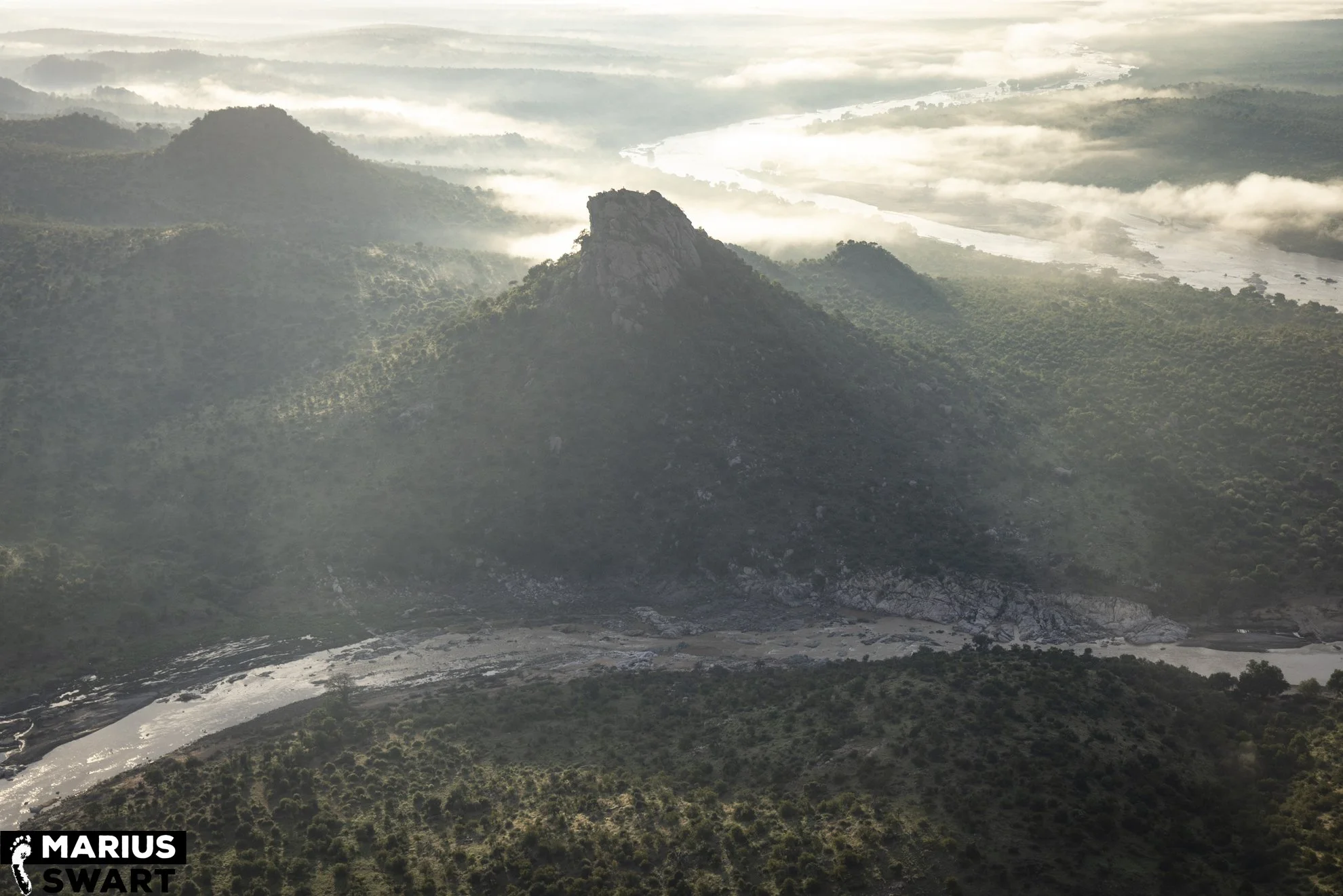
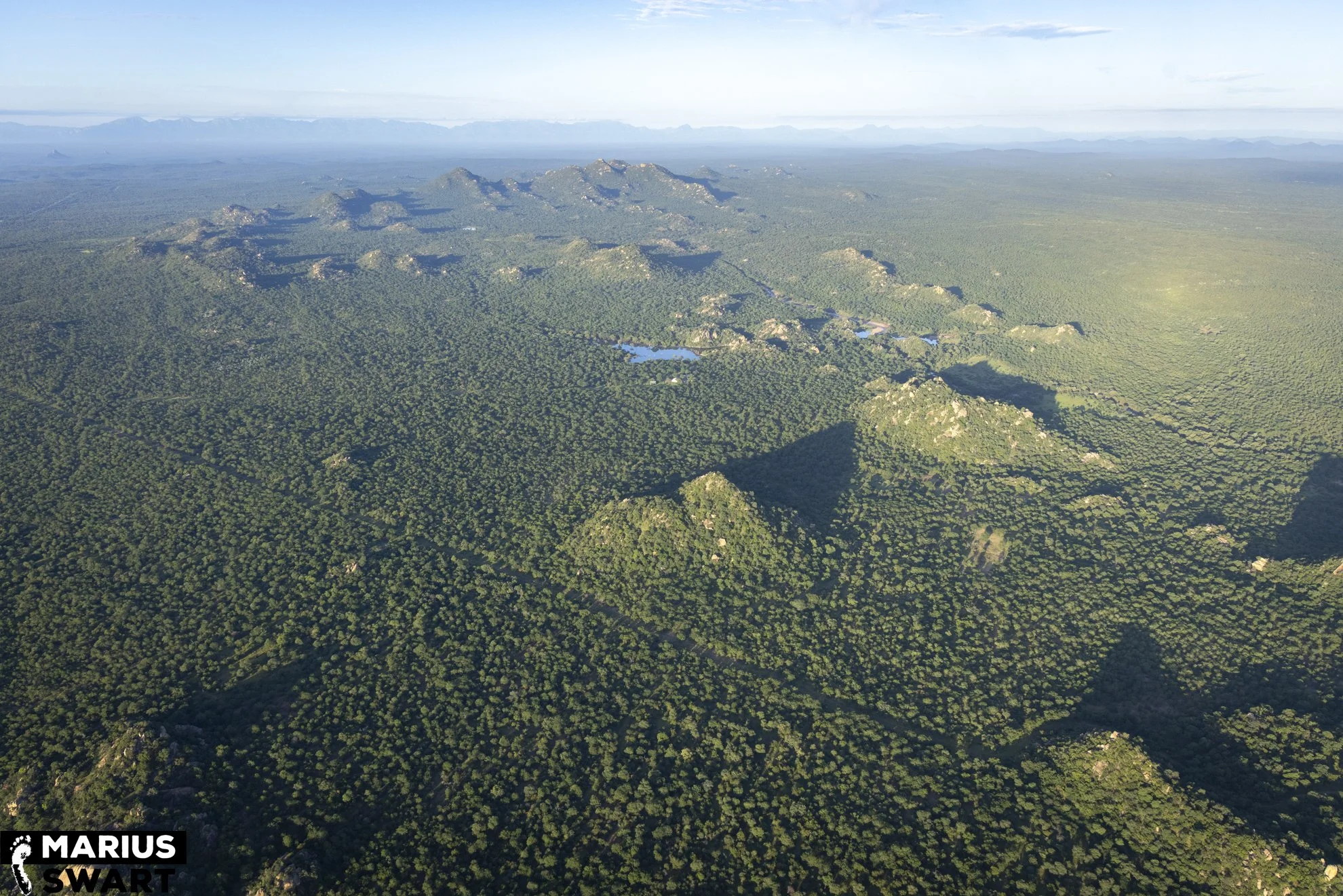
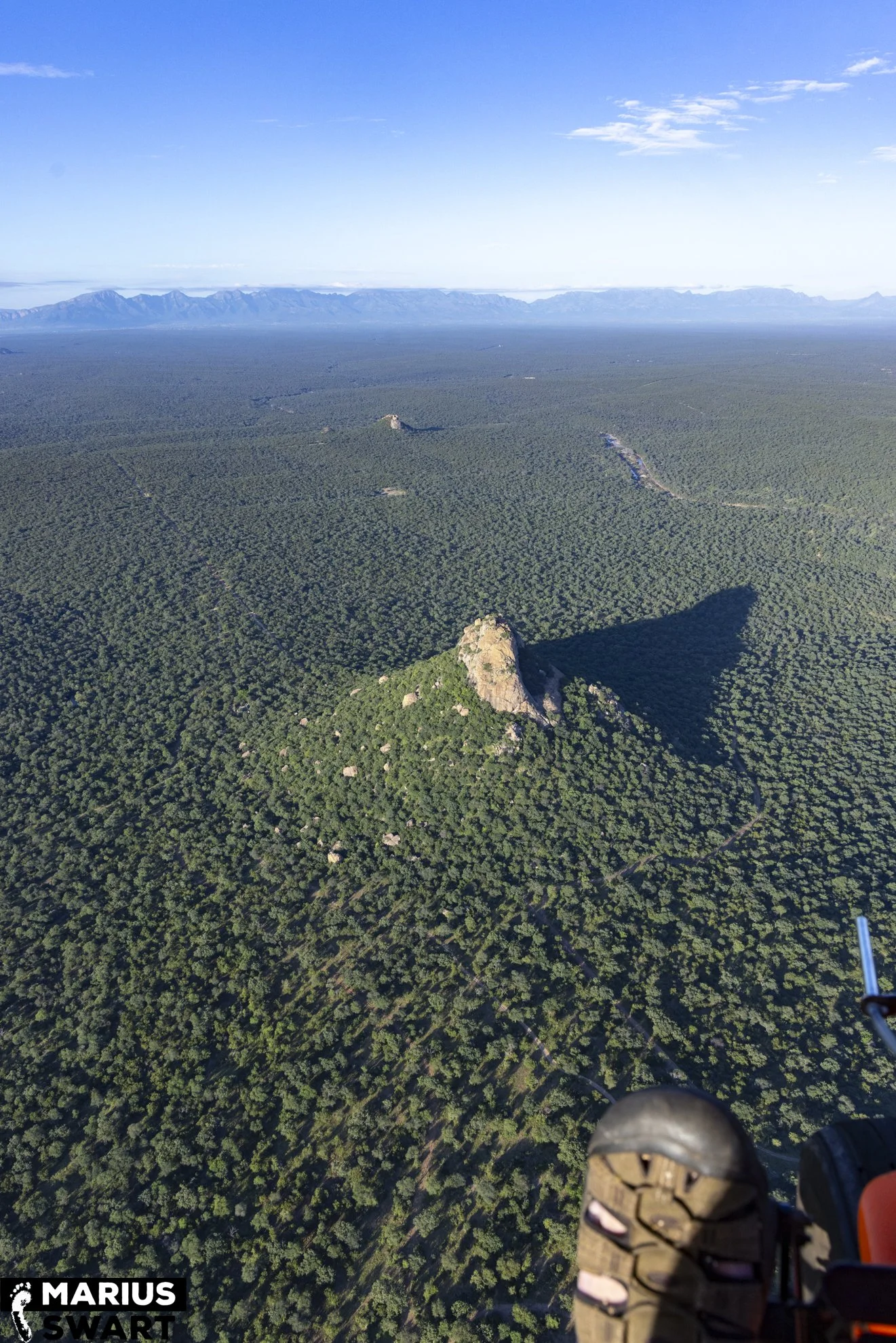
Planning a scenic sortie usually begins with selecting a particular topographical feature deserving of exploration. Despite some restricted airspace, Kruger Park and a few military areas, in this part of the Lowveld where I live we are absolutely spoilt for choice. Gently undulating low-elevation landscape (1400’) populated with very few humans and a bounty of wildlife, generously punctuated by a host of bouldered granite koppies (rocky outcrops), a host of meandering seasonal as well as perennial rivers…and to top it all off, the dramatic Drakensberg Escarpment rising to 6000’ in the west.
There are advantages and disadvantages to riding a motorcycle in the sky, and one disadvantage is its susceptibility to wind and thermals. Luckily strong wind is irregular but due to its low elevation and latitude, the Lowveld here gets pretty hot and thermal convection is a given. Sunrise usually provides the most pleasant conditions but in our winter it’s cool enough to comfortably fly till late morning.
I love the building anticipation created by watching the weather forecast to select just the right morning to go!
Waking at stupid-o-clock in the dark to get to the hangar in the pre-dawn is equal parts challenging and exciting…nothing a flask of strong coffee can’t balance out.
The soft pastel colours in the sky and serene stillness of everything, has a truly calming effect on the gravity of fully engaging in meticulous attention while sequentially working through the steps of the pre-flight inspection…it’s not easy to remain present for this critical task as your mind is already flying over the landscape…taking in the beauty…
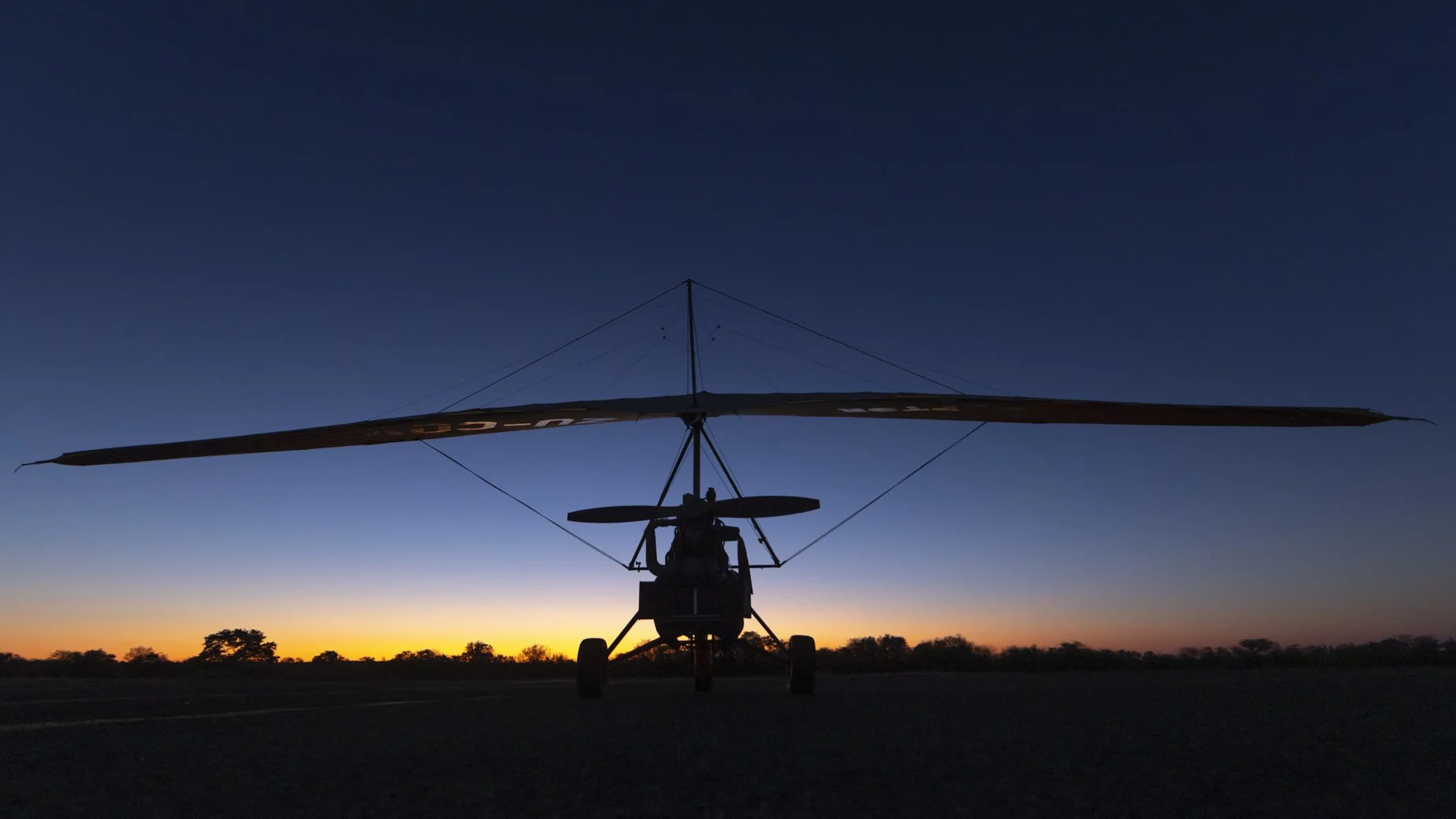
With the 1st parade done, the only thing left to do is another sip of coffee before strapping in, and with a loud “Clear Prop!”, press the ignition-button and warm up the engine. Depending on the ambient temperature, warm-up may take anything up to 4min, during which time an eye is cast on the cylinder-head and coolant temps, the QNH is set for the current elevation, radio is switched on, frequencies checked, radio broadcast of intentions done and taxi to the holding-point. With the coolant temperature at 64C it is time for a mag and full-throttle RPM check, final radio call, scanning for possible aircraft approaching the runway and then lining up on the runway…ready for take-off.
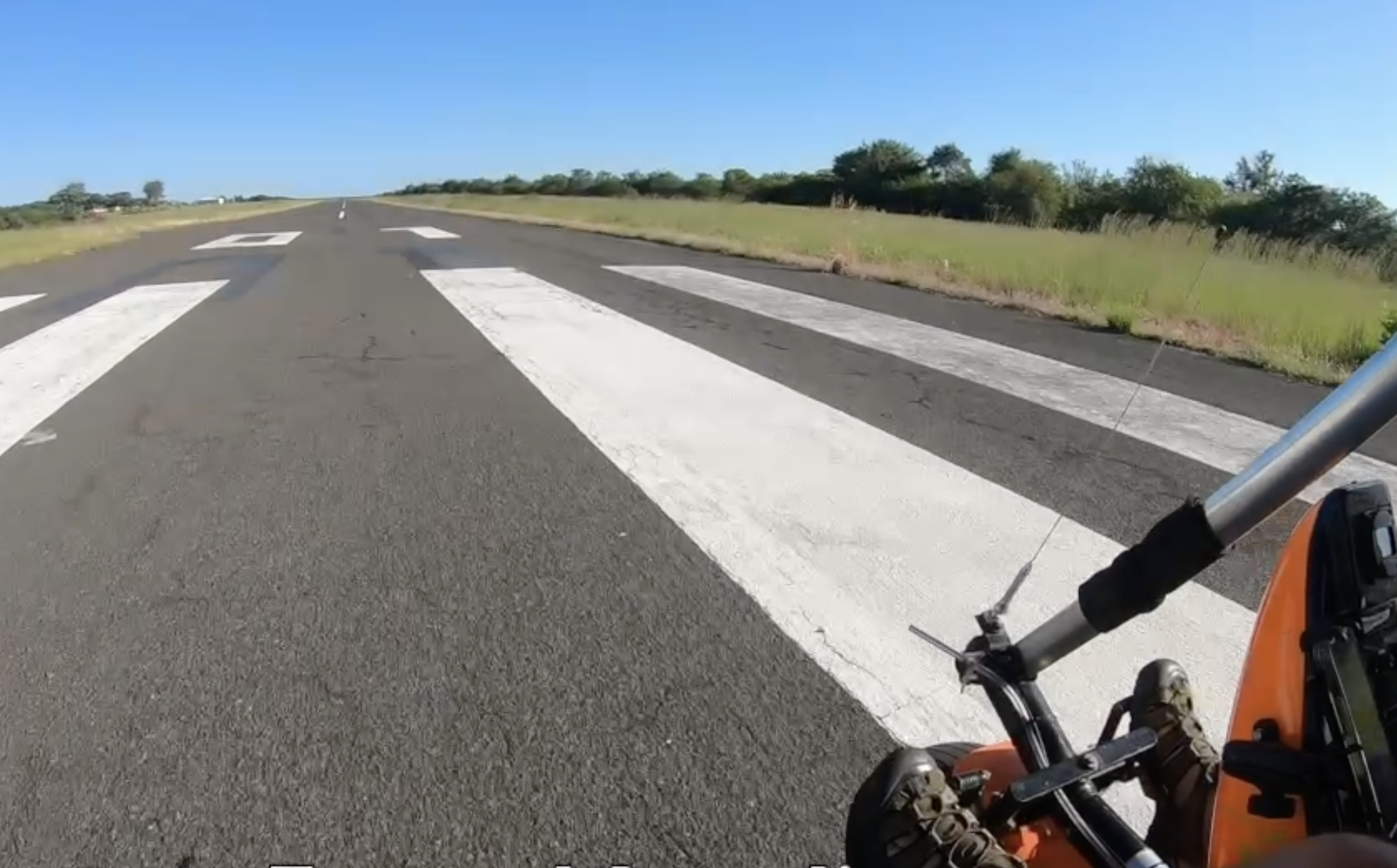
A final glance around the trike to be certain nothing is leaking or loose, leads to an incredible sensation…gentle but firm application of full throttle and the resultant barreling down the runway. Acceleration is surprisingly brisk due to the fine-pitched wooden prop attached to 65hp, wind rushing over your entire body as it’s pushed back in the seat. Eyes fixed on the horizon, wing level, a cursory glance at the airspeed and a gentle nudge at 40mph, results in the most incredible sensation ever…rotation or lift-off! An initially subtle departure from terra firma with an increasing rate of climb as airspeed increases, to an eventual declining rate to settle at a steady ascent takes us to the after-take-off checks.
With this completed, we can start navigating towards the focus of our sortie while occasionally checking instruments and broadcasting our location, altitude and intentions.
Only now is it possible to really relax and enjoy the surroundings, all the while keeping a lookout for other aircraft as radios sometimes fail.
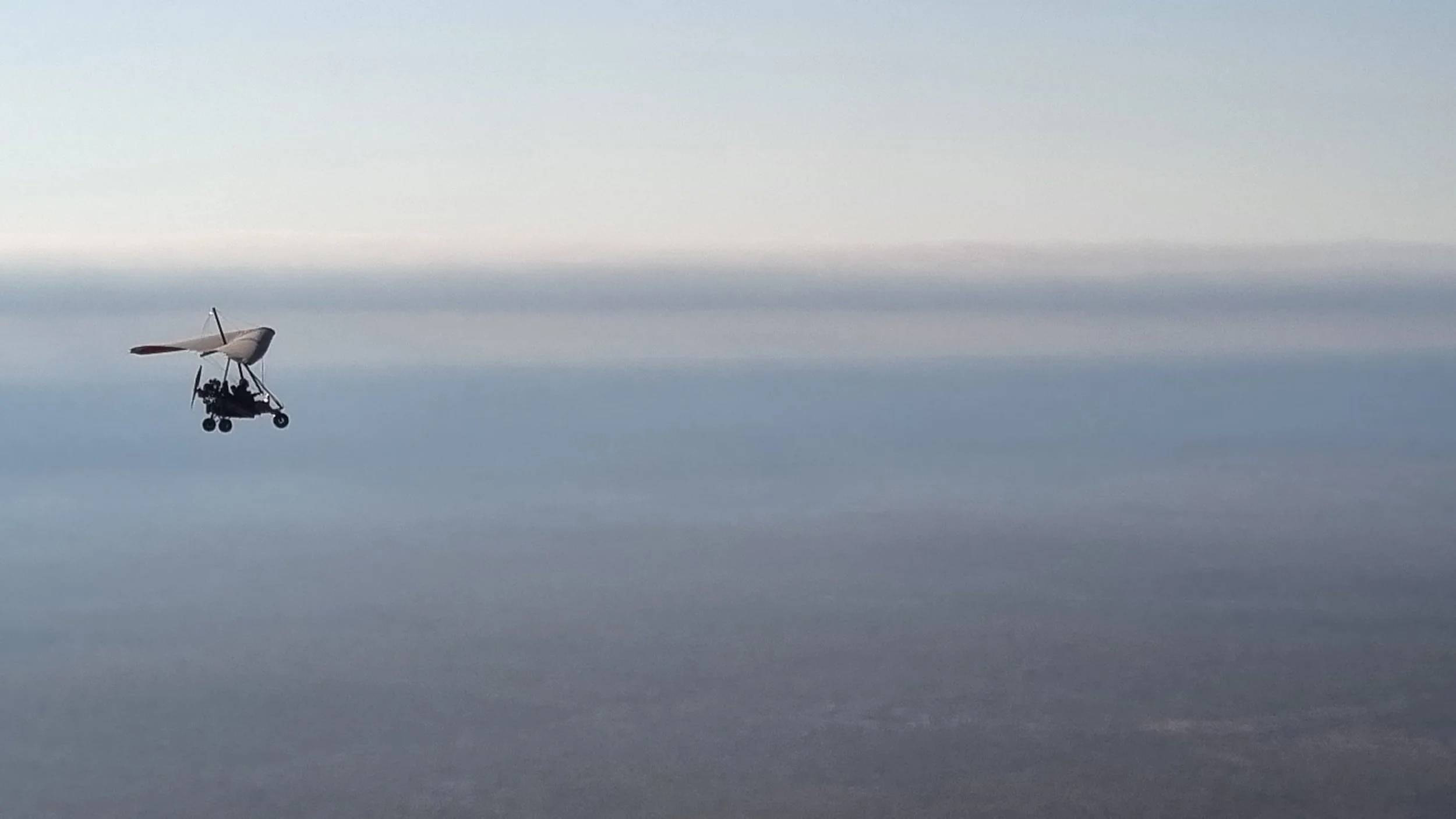
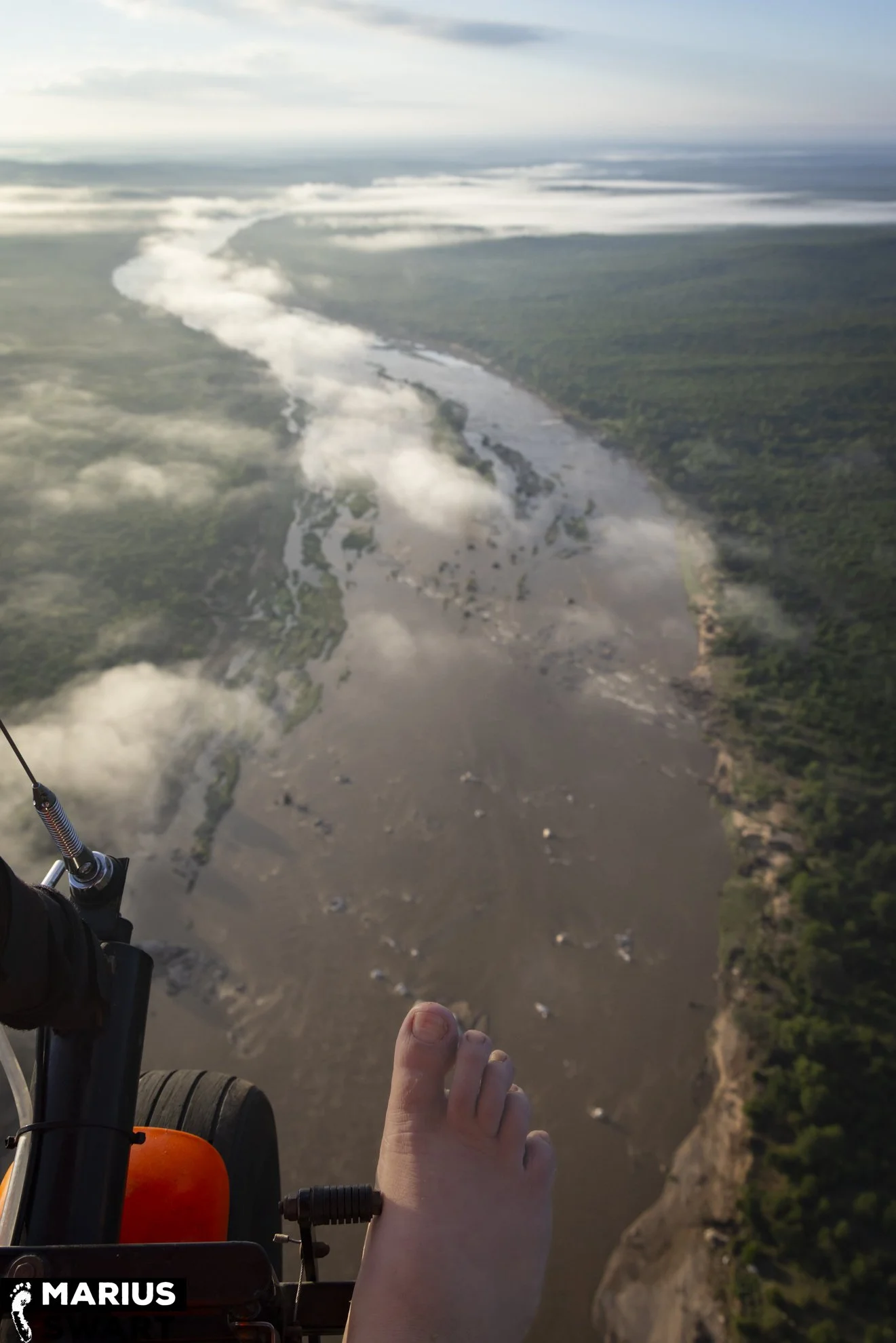
Slowly floating over the landscape has a meditative quality…staring out over the expanse, I take particular note of the topography, the texture if you will…wondering what it would feel like if I could reach down from my vantage-point and gently glide my hand over the terrain…feeling every subtle nuance…like reading Braille. Just like I would be touching the landscape…so it touches back…reaching deep into my soul in a very intimate way…a sense of connection…of belonging.
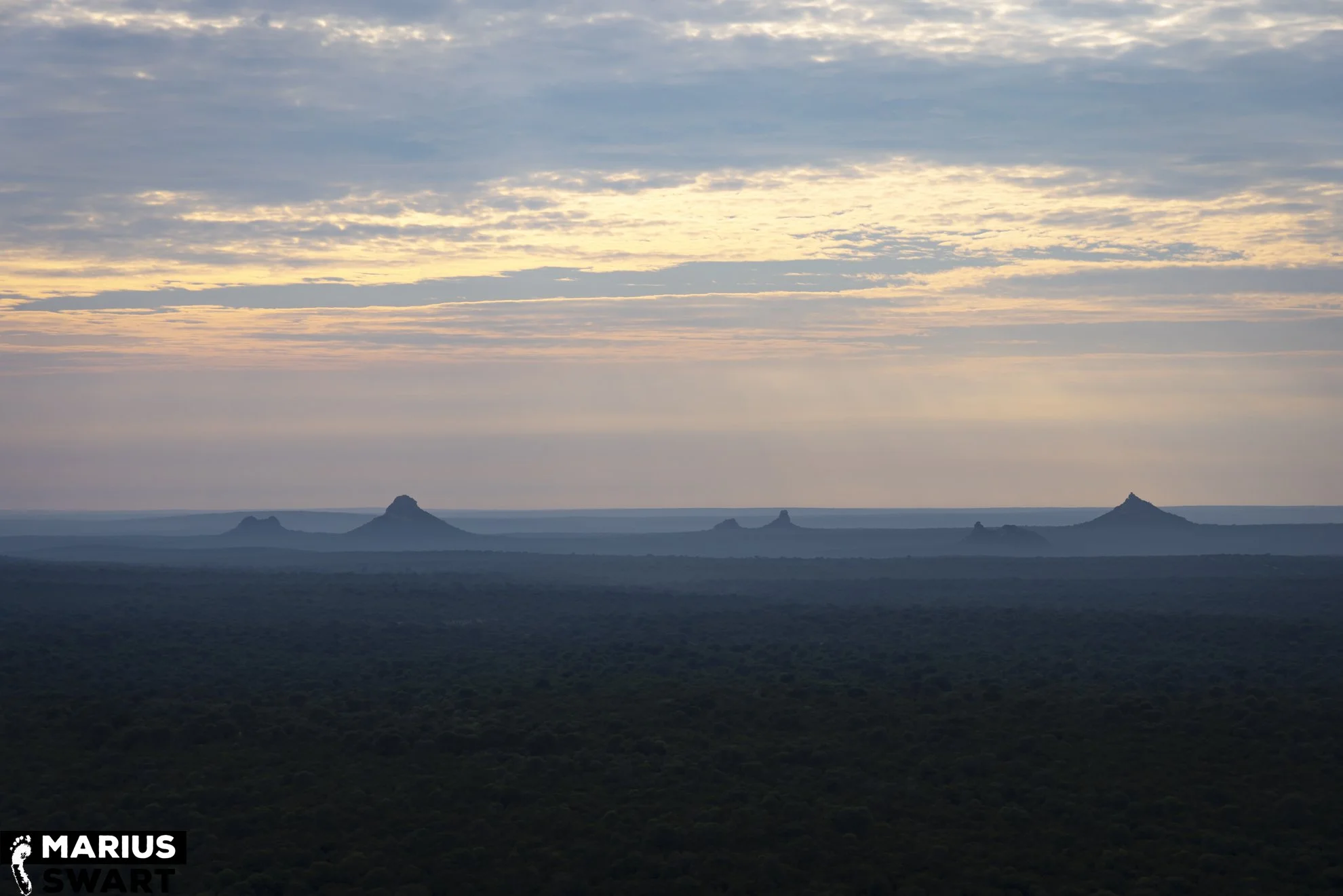
The koppies, granitic in origin are stacked with large weathered boulders, but varying in shape, size and concentration. Like sentinels they stand witness to this ancient landscape, maintaining a watchful eye over the territories of lions and rhinos, guarding the sanctity of wilderness from one generation to the next.
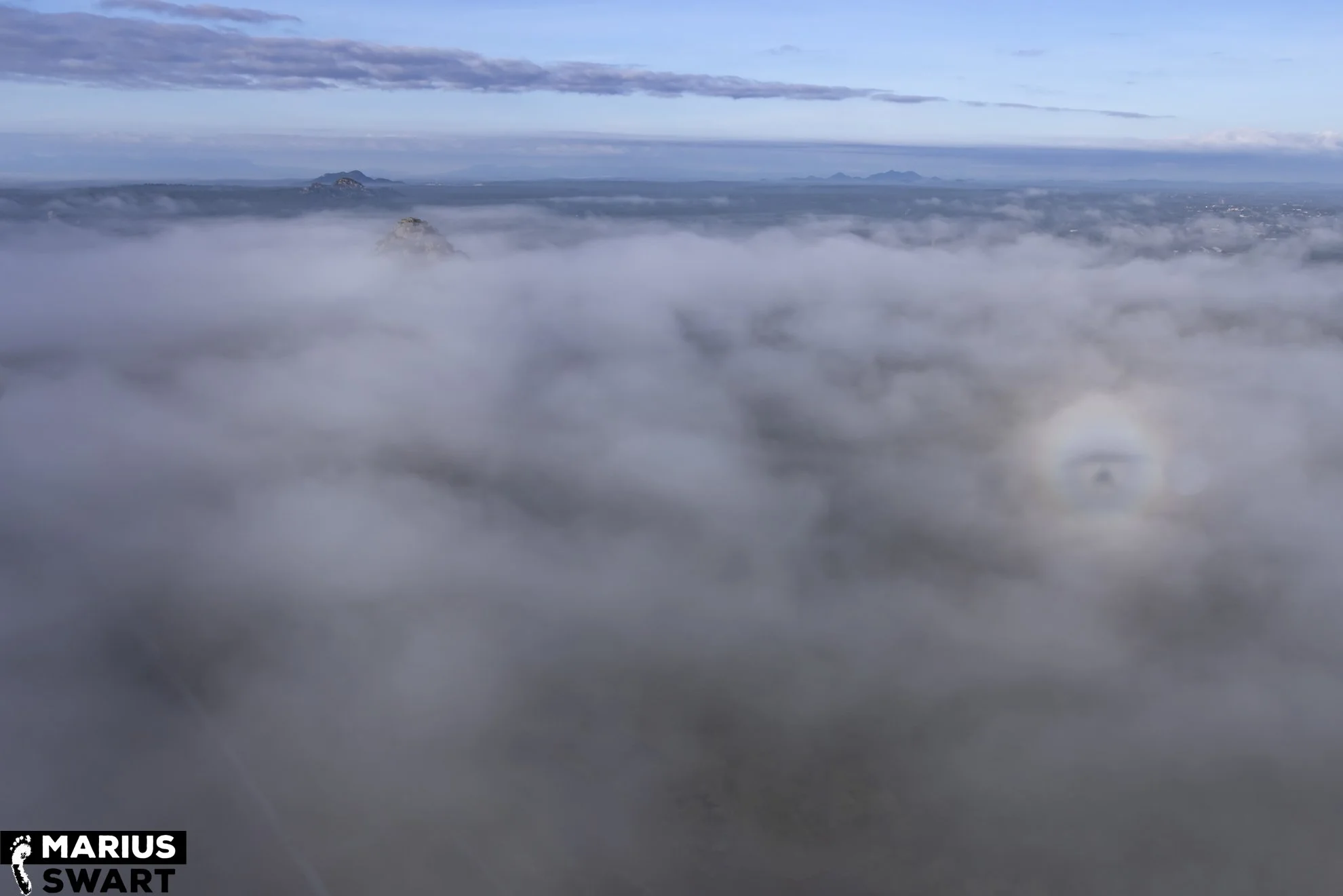
Another long-awaited phenomenon which I was privileged to be privy to, is Pilot’s Glory. Sunlight is diffracted by water droplets in mist or cloud to create a circular rainbow around the shadow of the aircraft.
A surreal and awe-inspiring experience!
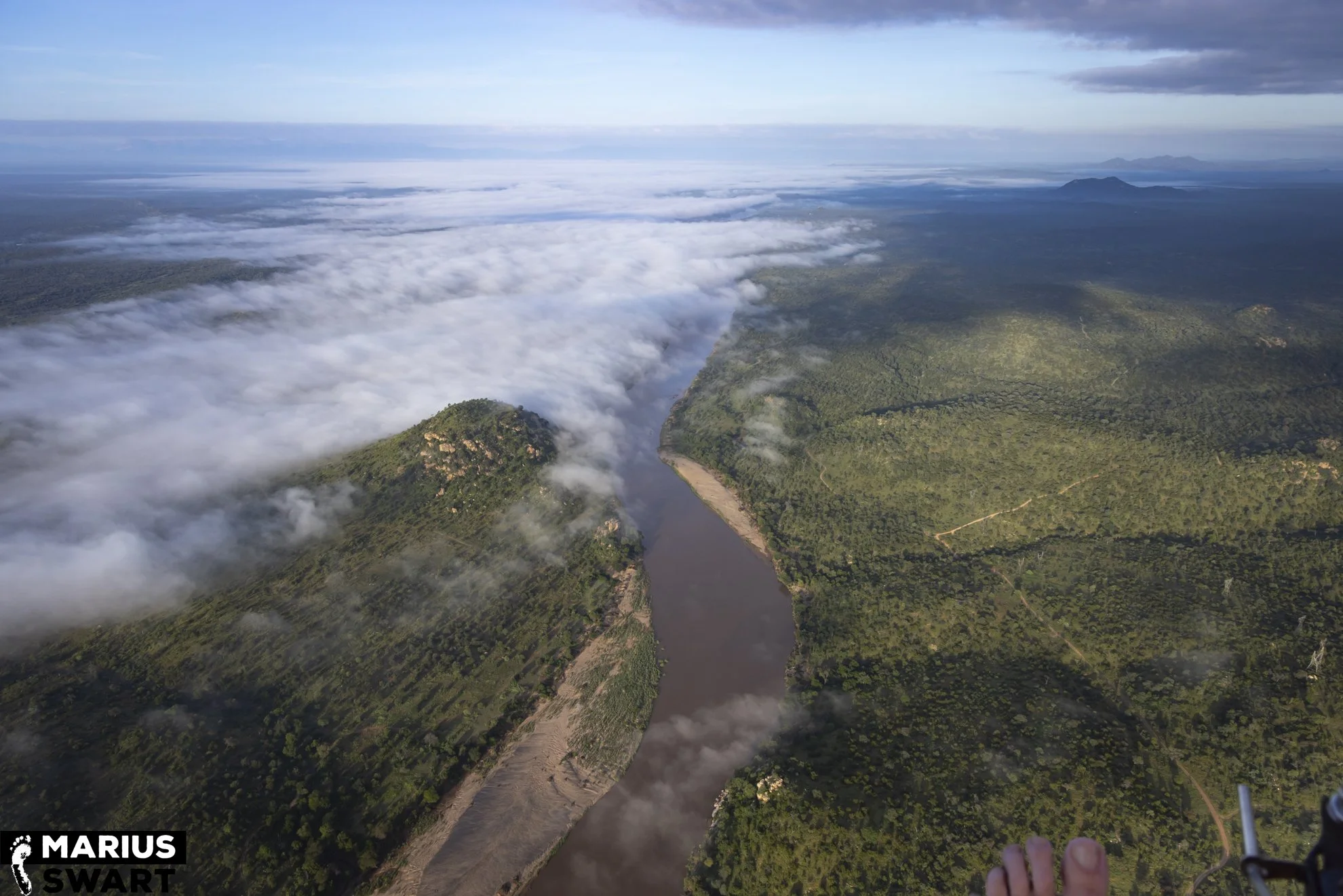
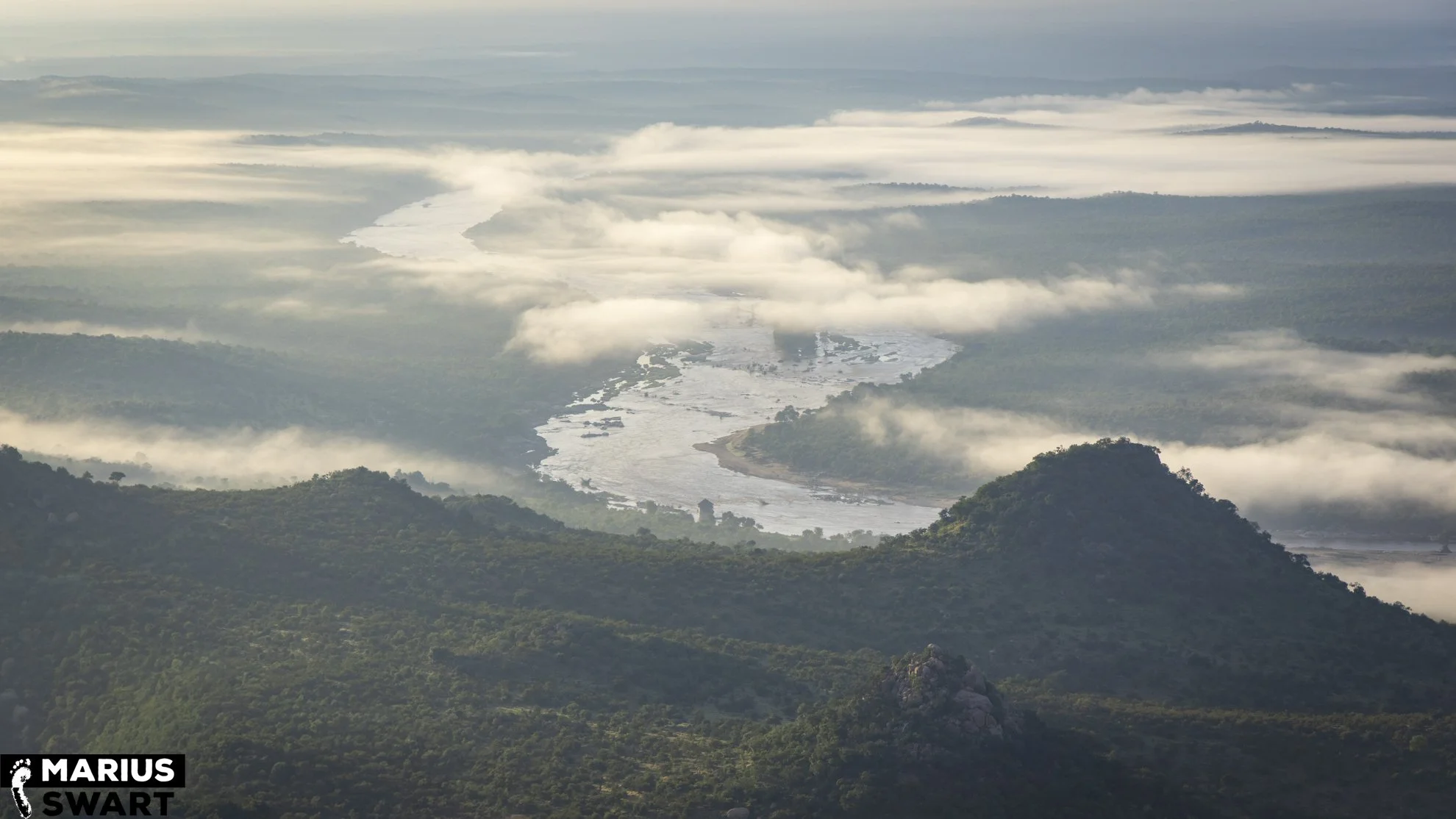
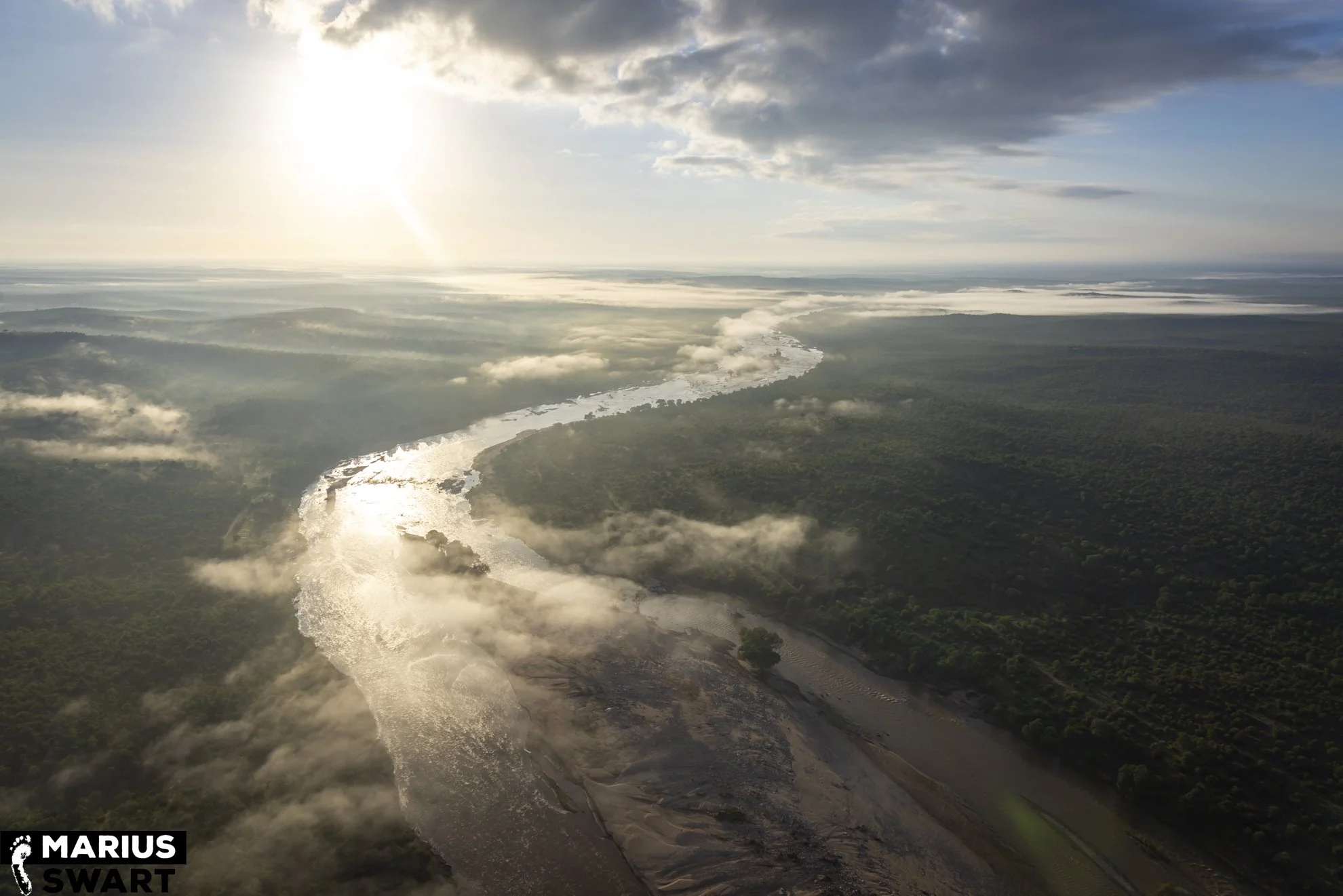
Rivers here are life-blood conduits channeling precious water, threading their course from west to east across the landscape. Especially late in the dry season when temperatures sky-rocket, these rivers become linear hotspots for wildlife. Their draw is irresistible, even to a little microlight.
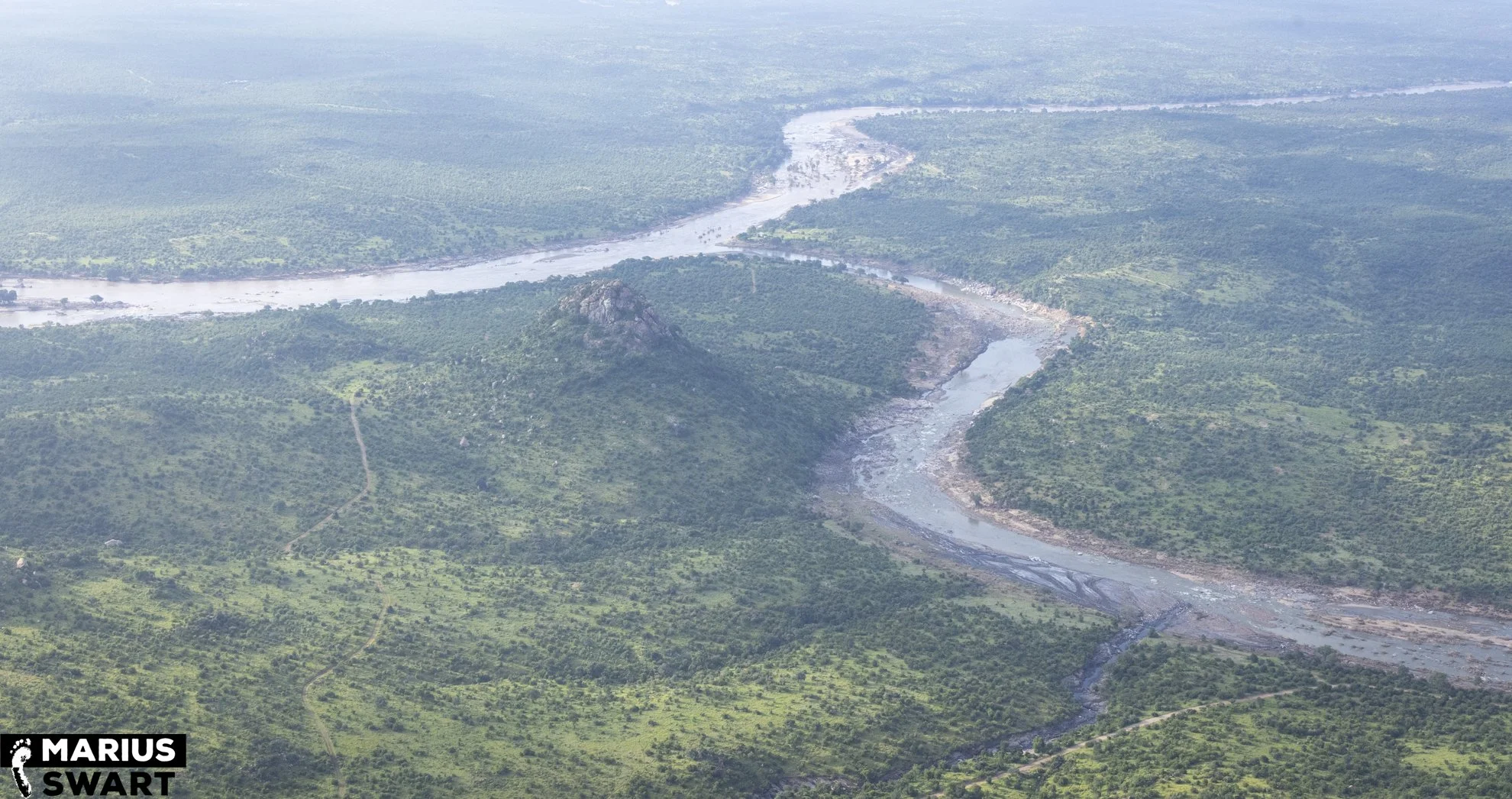
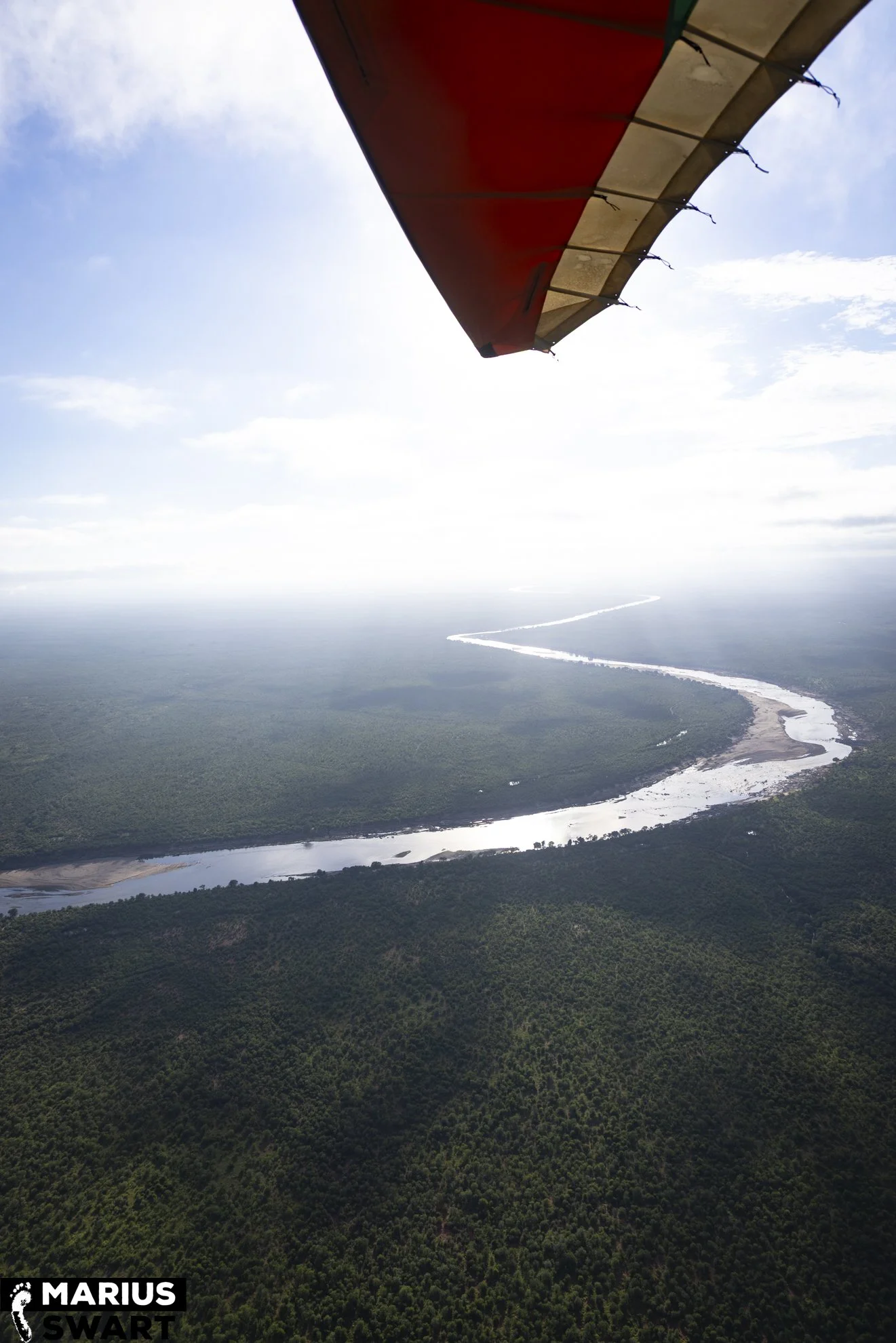
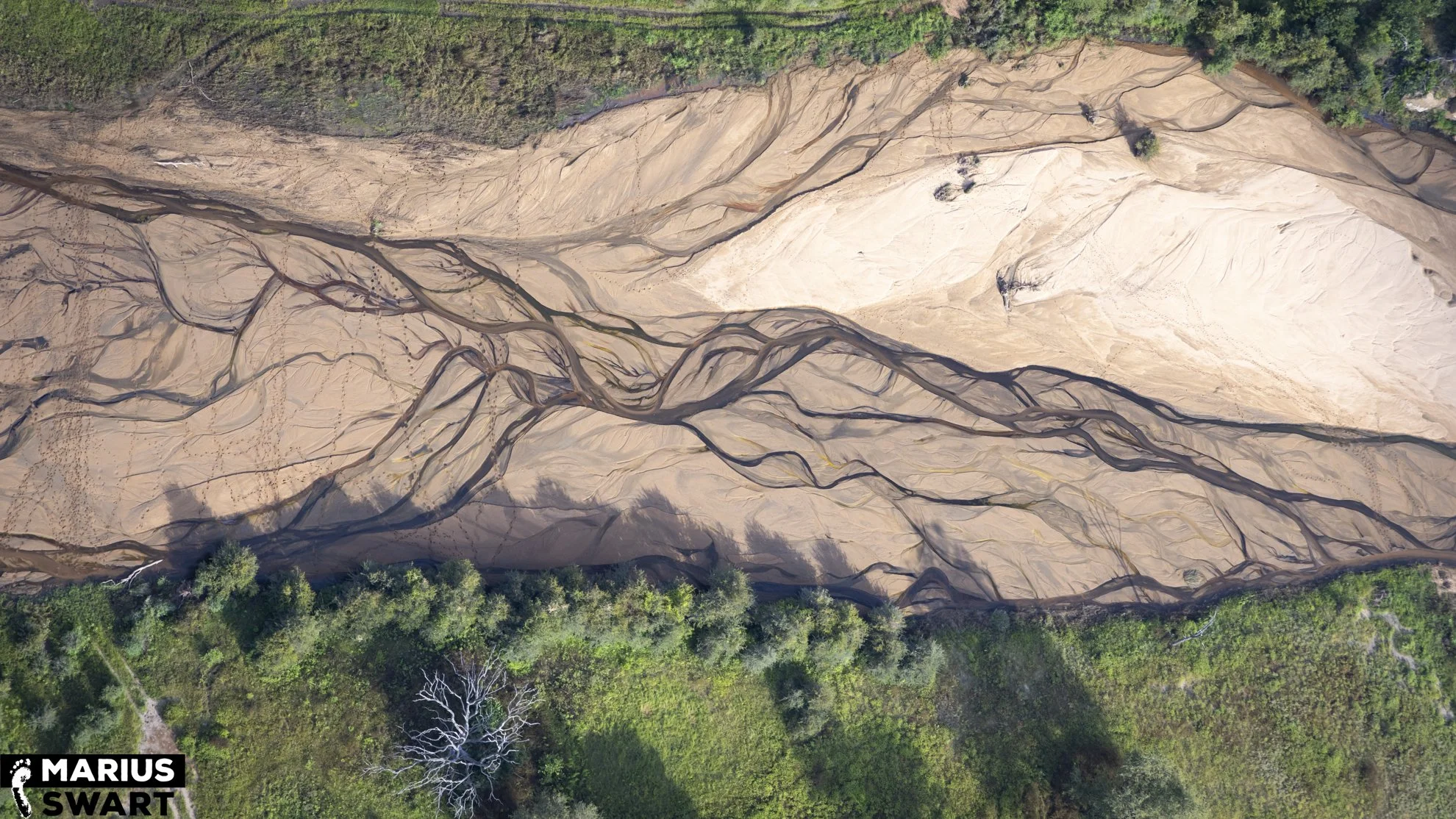
All too soon it’s “Bingo!”…not the card-game, but the term used for the moment where only sufficient fuel remains to make it back to base with requisite reserves…
En route back I often yearn for a bit of adrenalin.
After a quick check of all systems, a broadcast of my intention to return at low-level and a scan for other aircraft…it’s time!
Easing off the throttle and pitching the wing down, the trike accelerates in a descent, attaining excess airspeed which adds a layer of safety to this otherwise risky practice.
Maintaining around 15-20mph above stall-speed is a comfortable safety-margin and allows for exhilarating steep turns while following the course of a small drainage-line or river, hugging the contours of a valley or slalom around koppies.
Threading the needle of excitement and safety requires absolute presence making for deeply satisfying execution…demanding a suitable synthesis of mind and body.
It is however prudent to restrict this activity to brief periods…
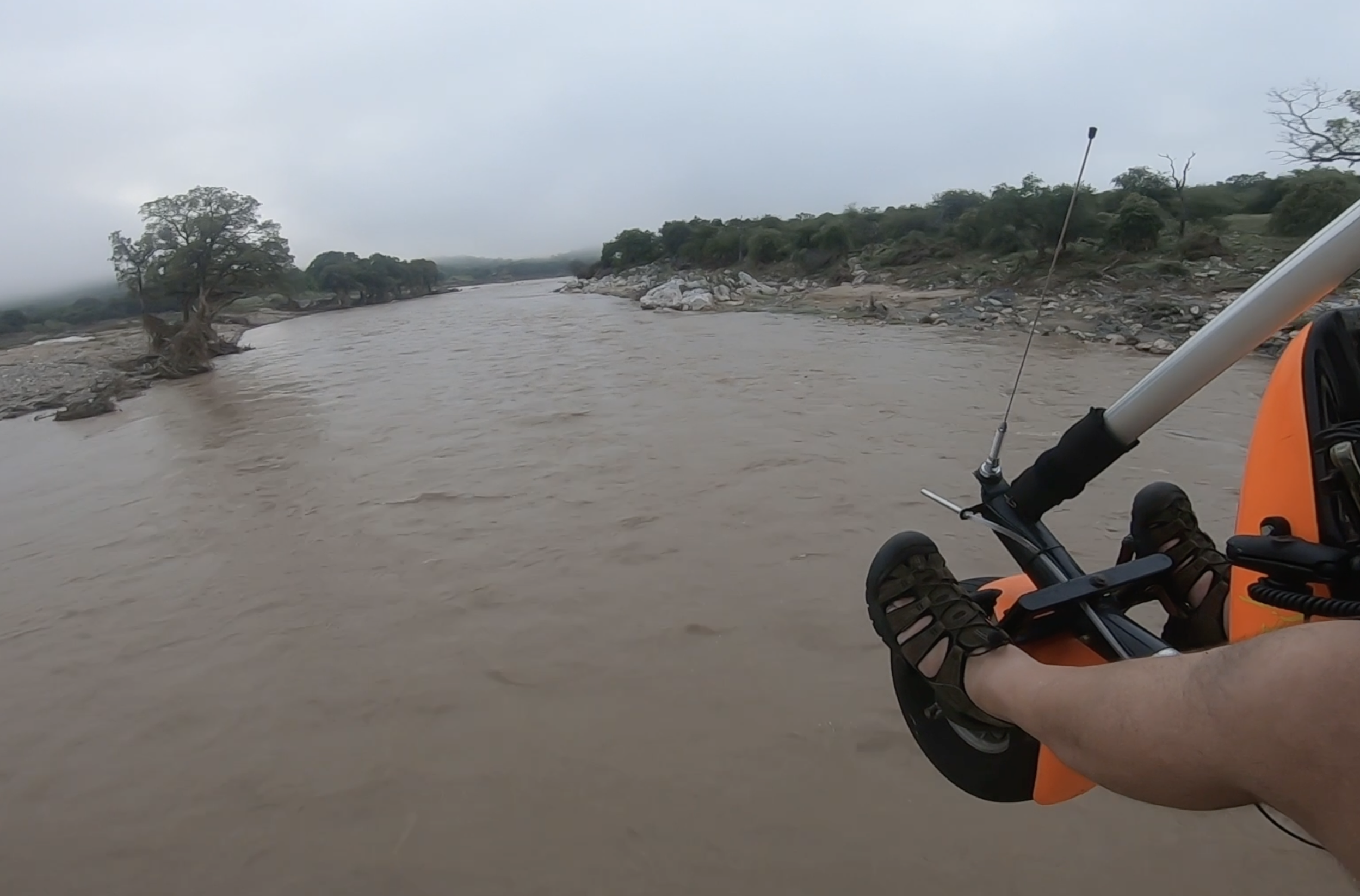
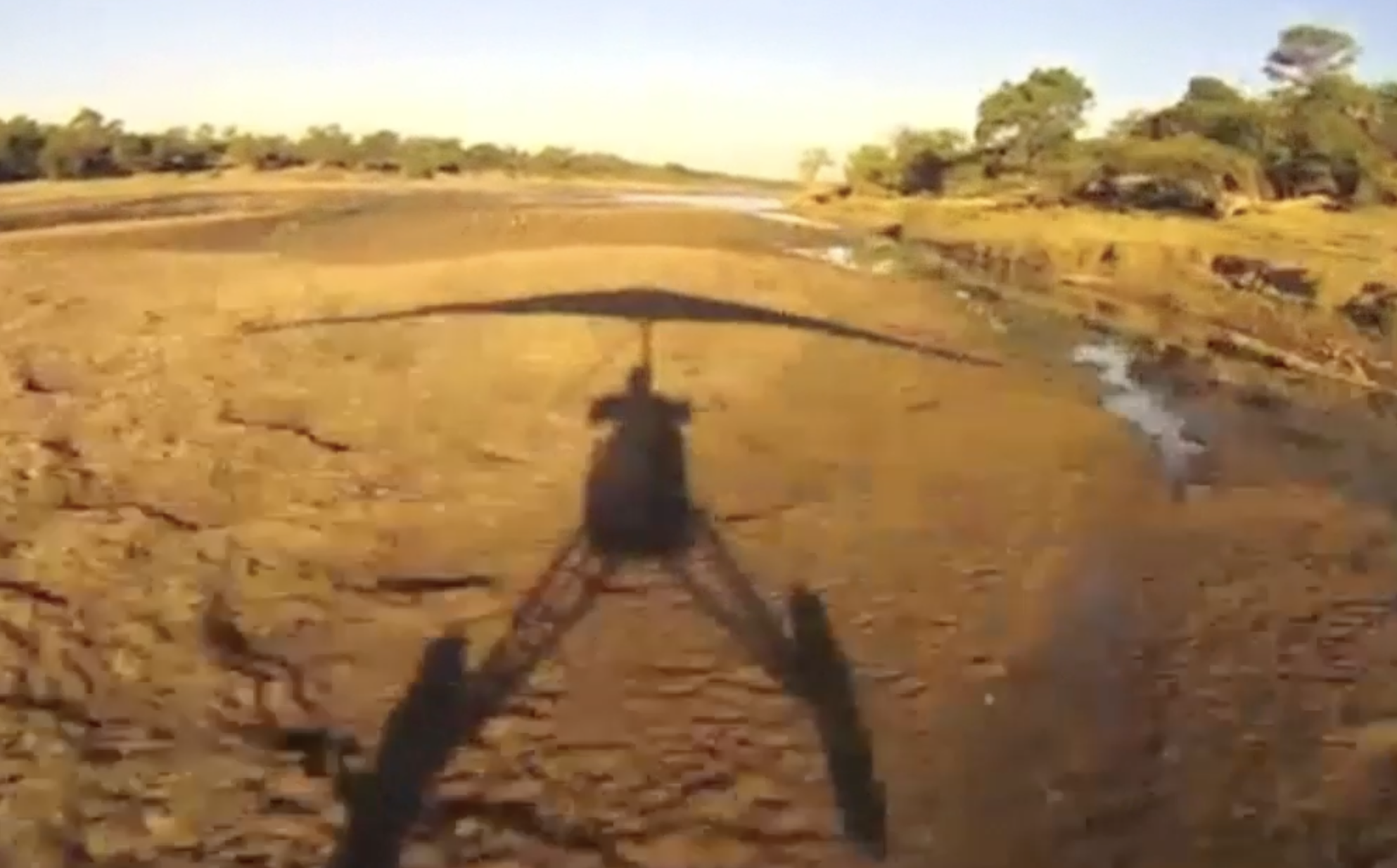
With a racing heart, tingling hands and dilated pupils, too soon it unfortunately is time to return to a respectable altitude, check temps, calm down and set up for the landing.
Sometimes a long final-approach with slow and incremental input adjustments is really good practice for form…but sometimes switching off the engine at 500’ above the runway and aiming for a tightly spiralling dead-stick spot-landing is called for…important to do both.
Either way, converting and managing the kinetic energy into speed and height is likely the most rewarding of all challenges…the aim is to have as many landings as you have take-offs.
“Any landing you can walk away from is a good landing. Any landing where you can use the aircraft again, is a great landing” - Chuck Yeager
Ultimately it seems that the juxtaposition of attributes, ones I innately possess versus those that come with effort, in conjunction with the incredible sense of freedom and connection, is why I shall endeavour to continue flying until the day I become medically unfit.
Yours in authentic living,